
text by: Olga Gromek
Perspektywy Women in Tech Summit 2026 is coming!
This year’s theme, UNLEASH NEW ENERGY, is defined broadly: as the energy of technological systems and the energy of the people who design, develop, and keep them in motion. A particularly vital topic at this year’s Summit will be nuclear energy - not as an abstract vision of the future, but as a very real answer to today’s challenges. In the debate on climate and energy security, it is becoming increasingly clear that without stable, low-emission energy sources, maintaining the pace of transformation is a daunting task. This is precisely where nuclear power returns to the stage.
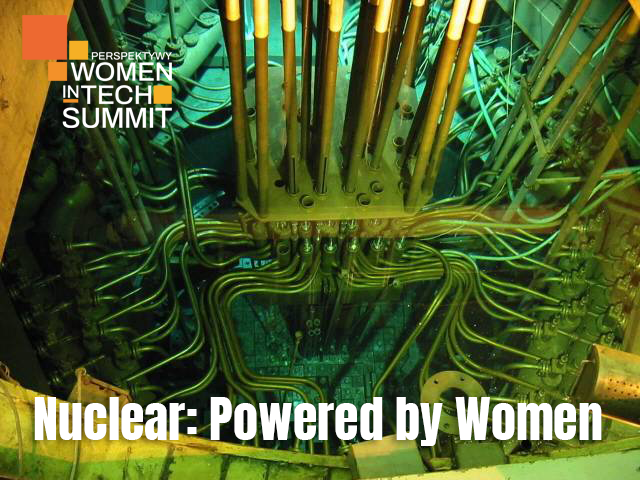
As a technology that emits virtually no CO2 during production, it operates independently of weather conditions and ensures a continuity of supply that renewables alone cannot guarantee. At the same time, modern reactors are designed with significantly higher safety standards, and the entire fuel cycle is subject to strict international control. Increasingly, nuclear power is also discussed as a vital complement to RES (Renewable Energy Sources) - a stable backbone for systems based on solar and wind energy.
Nuclear. Powered by Women: Building the Competencies of the Future
The conversation about nuclear energy is shifting from the ideological to the systemic. It concerns concrete decisions: how to build the energy mix, how to reduce emissions without destabilizing the economy, and how to develop the expertise of those who will design and maintain this system. This is where we step in with our Summit zone: Nuclear. Powered by Women. It will be a space for dialogue on technology, regulations, real-world challenges, and the pioneers building expertise in a sector that, until recently, was almost entirely closed.
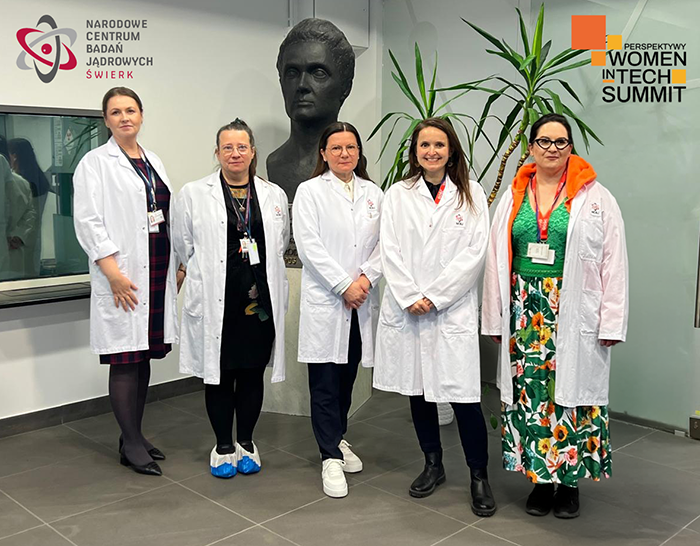
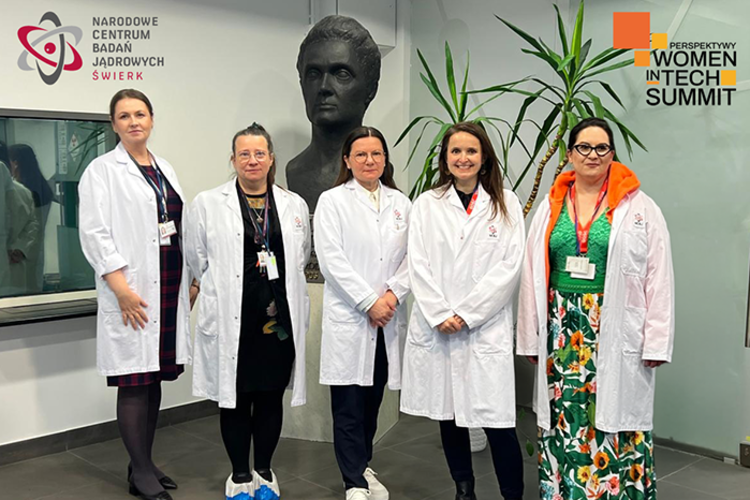
From left: Dr. Jadwiga Witek (Spokesperson, National Centre for Nuclear Research), Prof. Agnieszka Pollo (Deputy Director for Scientific Affairs, National Centre for Nuclear Research), Dr. Eng. Agnieszka Celińska, Dr. Bianka Siwińska, and Olga Gromek (Perspektywy Education Foundation).
It is with great pleasure that we accepted the invitation of Professor Agnieszka Pollo, Deputy Director for Science at the National Centre for Nuclear Research (NCBJ), which joins us this year as a scientific partner. NCBJ is a place where nuclear technology is not just a topic of debate, but a daily reality.
"Science - both in cosmology and nuclear technology - thrives on a diversity of perspectives. This is no longer a matter of mere representation, but of the quality of decisions and the ability to solve complex problems. Areas such as nuclear infrastructure, including work around the MARIA Reactor, now require interdisciplinary competencies and long-term systemic thinking. Increasing the participation of women in these processes provides a real boost to the potential of science and the entire sector - from fundamental research to applications in medicine and energy. It is also a signal that we are building the future of technology in a more inclusive and responsible way," says Professor Agnieszka Pollo.
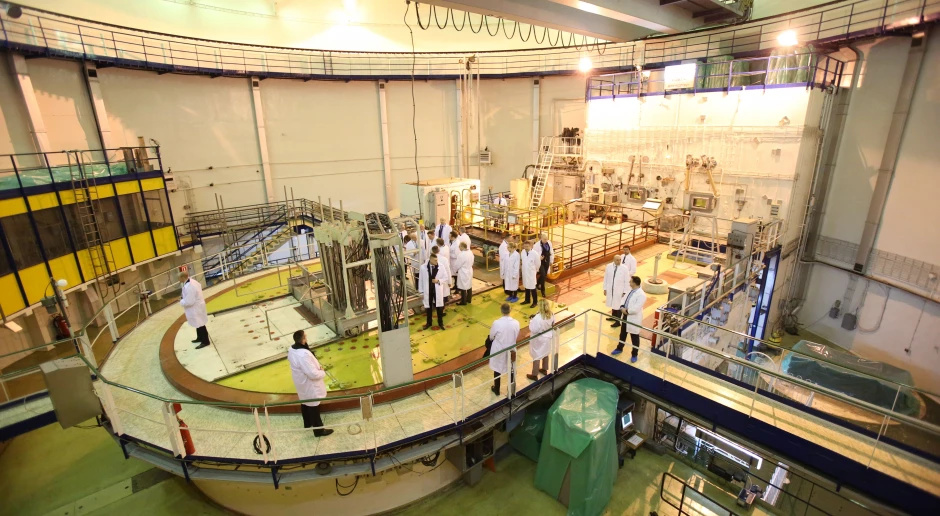
foto: PAP/Leszek Szymański
At the center of this "atomic reality" stands the MARIA reactor - one of the most important research facilities of its kind in Europe and Poland’s only active nuclear reactor. Although it does not produce electricity, the lives of hundreds of thousands of people depend on its operation. It serves as critical infrastructure for both science and healthcare, providing the neutron flux essential for research and the production of medical radioisotopes.
An Atomic Legacy and an Engineering Masterpiece from Świerk
The story of the MARIA research reactor is a narrative that - like many Polish innovations - balances brilliant technical thought with a struggle for survival within difficult economic and political realities. It is a machine unique on a global scale and a "living monument" to the scientific legacy of Maria Skłodowska-Curie, serving for over half a century as the heart of Polish nuclear science in Świerk, near Warsaw.
In the 1950s, as Poland was yet to develop its own nuclear technology, the EWA reactor (delivered by the Soviet Union) served as a training and experimental base. It was there that real expertise was built: from understanding core physics and fuel handling to reaction control and safety procedures. Concurrently, in the 1960s, zero-power reactors like AGATA were developed, allowing for the verification of calculations and the testing of various core configurations in real-world conditions.
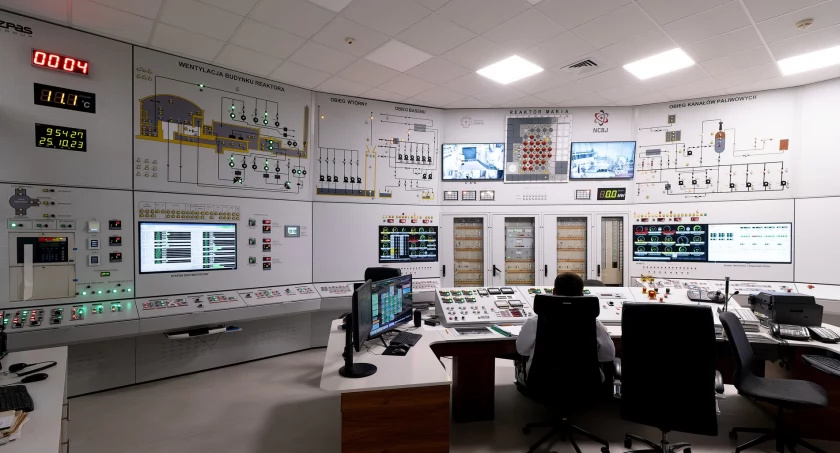
foto: NCBJBuilt upon this foundation, the MARIA reactor reached its first critical state at 0:17 AM on December 18, 1974, propelling Polish nuclear engineering into the global elite. It was designed and built entirely in Poland by teams of physicists and engineers from Świerk, originating from the community fostered since the 1950s by figures such as Professor Andrzej Sołtan, founder of the Institute of Nuclear Research.
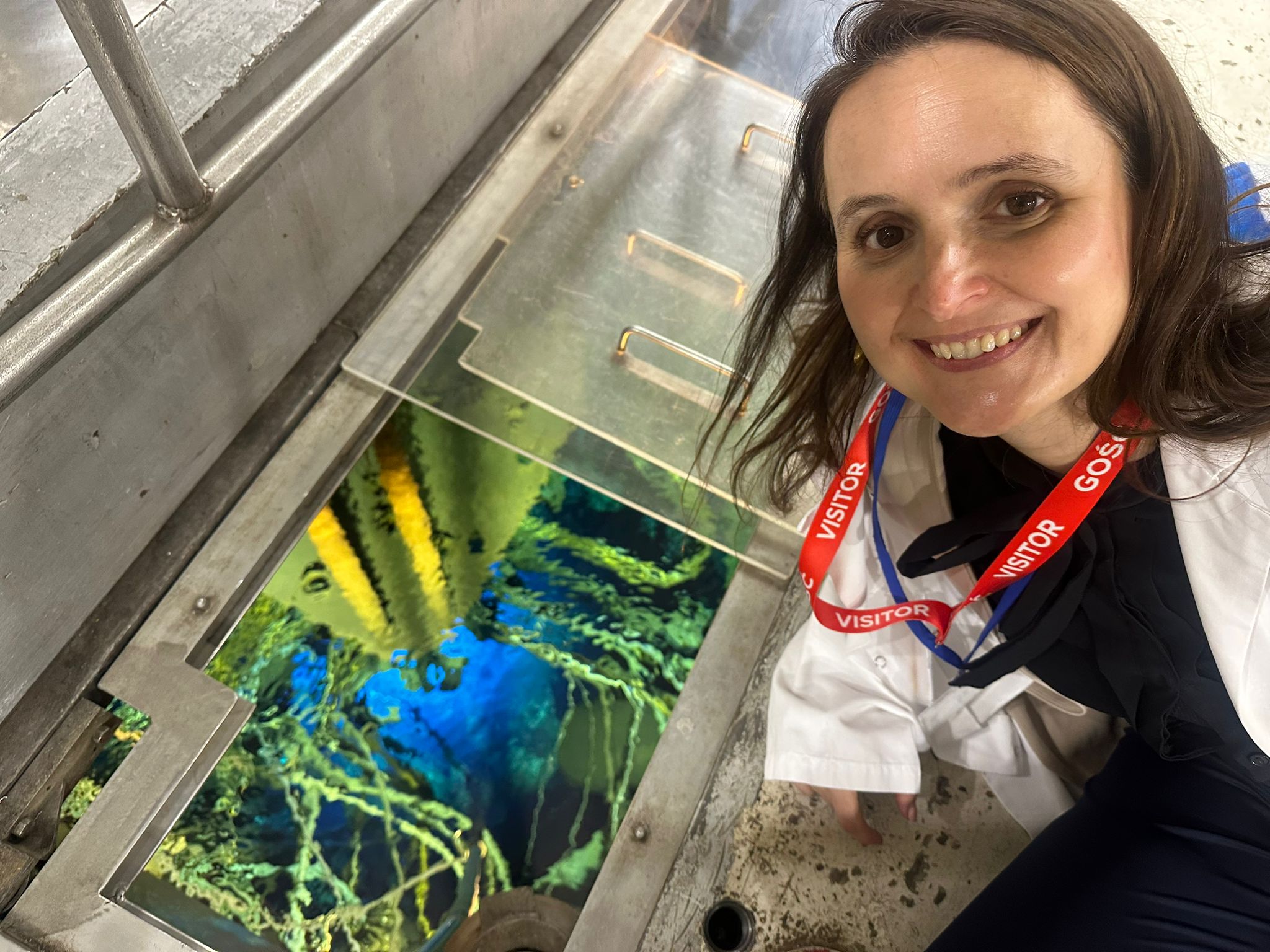
"MARIA was an unprecedented undertaking, requiring the creation of unique solutions that continue to earn the admiration of experts worldwide," says Dr. Agnieszka Celińska, who oversees quality assurance and operational safety for the reactor at NCBJ. "It is a high-flux research reactor of the pool-and-channel type with a thermal power of 30 MW. Its core is submerged in a water pool, while the fuel operates in separate channels through which pressurized water flows, allowing for precise control of temperature and other operating conditions. Additionally, the use of materials such as beryllium and graphite allows for better control of neutron behavior and increases the efficiency of the entire system. The result is a reactor that is not a copy of any specific design, but a solution tailored to a very specific goal: stable operation at a high neutron flux, required for material research and the production of isotopes used in oncological diagnostics and therapy."
Life-Saving Isotopes for the World
MARIA operates for approximately 4,000 hours a year, typically in 100-hour blocks. Every week, it helps save the lives of roughly 100,000 patients globally, providing 10% to 20% of the world's supply of Molybdenum-99 - an isotope essential for 80% of nuclear medicine procedures. MARIA also covers 100% of the Polish demand for Iodine-131 (used in treating thyroid cancer), as well as Lutetium-177, a beacon of hope in modern targeted therapy that destroys tumors with minimal damage to healthy tissue, and Samarium-153 for cancer pain management. To date, over 75.5 million people have received help made possible by MARIA.
However, the production of reactor-modified materials extends far beyond hospitals. MARIA is where Neutron Transmutation Doping (NTD) technology is refined. In this process, silicon monocrystals irradiated with neutrons achieve perfectly uniform resistance - a critical factor for power electronics in high-speed trains, electric vehicles, and renewable energy systems. MARIA even plays a role in mineral doping; the irradiation of colorless topazes gives them their unique, sought-after hue.
While these achievements are impressive, what lies beneath is even more spectacular: a system designed to operate stably and safely for decades, without risk to people, the environment, or the surrounding community.
Safety First: Multi-Layered Protection Systems
"The safety of the MARIA reactor is based on several levels that operate simultaneously and independently," explains Dr. Agnieszka Celińska. "The core is located in the reactor pool filled with water, which serves three functions at once: it cools the fuel, slows down neutrons, and acts as an effective radiation shield. The nuclear fuel itself is enclosed in airtight aluminum cladding, which retains fission products and serves as the first protective barrier. Heat is removed via forced water cooling, and operating parameters - such as temperature, flow, and power levels - are constantly monitored and linked to automatic shutdown systems. In the event of any deviation from permissible values, safety rods that absorb neutrons are immediately and automatically inserted into the core, stopping the chain reaction. While these redundant, overlapping safety systems are key to nuclear and radiological protection, the most vital element remains the people and their adherence to strict procedures. The operation’s integrity depends on the expertise of a highly qualified staff."
In practice, MARIA’s safety is ensured by a series of independent safeguards. Any potential gaseous emissions pass through a filtration system and are released into the atmosphere in a controlled manner. Emission and radiation levels in the reactor's vicinity are constantly measured as part of environmental monitoring and are no higher than in any other location.
Crucial to safety were the successive changes in fuel composition - specifically, the enrichment level of the $U-235$ isotope. Initially, MARIA ran on High-Enriched Uranium (HEU) at 80%; it transitioned to 36% between 1999-2002, and by 2014, it was fully converted to Low-Enriched Uranium (LEU), containing approximately 19.75% U-235. Concurrently, spent HEU fuel was transported back to its country of origin under international programs to reduce proliferation risks. For MARIA, this transition meant minimizing such risks while maintaining its vital research and medical functions.
It is estimated that, thanks to ongoing modernizations, MARIA will remain operational until 2050. Last year, the National Atomic Energy Agency issued a permanent operating license for the reactor. However, experts agree: the design of its successor must begin now, as the process of building a new research reactor takes nearly 20 years. The vision of a "Nuclear Valley," combining isotope production with nuclear fusion research, represents a chance to secure Poland’s technological sovereignty.
Pure Harnessed Energy
The MARIA reactor is proof that Polish engineering can not only withstand the test of time but also dictate global standards in life-saving medicine. Standing over the reactor pool and gazing into its depths at the mesmerizing, blue Cherenkov radiation, one feels the presence of pure energy, harnessed to serve humanity. For half a century, this machine has worked for us in silence, aiding over 75.5 million patients. Yet, it is not the neutrons themselves that matter most - it is the people, their passion, and their expertise that keep this atomic heart in Świerk beating steadily through geopolitical storms and technological shifts.
We would like to extend our deepest thanks to the scientists of the National Centre for Nuclear Research in Świerk for their time and their fascinating stories. We will see them again on June 10-11, 2026, at the Summit!
See you at the Perspektywy Women in Tech Summit 2026!
This year’s slogan, UNLEASH NEW ENERGY, is more than just a tagline; it is a call to action. The history of civilization is, after all, the history of energy. From the Big Bang and the steam engine to the information revolution, AI, quantum technologies, and the simplest daily act of getting out of bed - energy is the essence of life.
It is energy that allows us to grow, collaborate, innovate, and build the future. When energy is lacking, we lose not only our strength and agency but also our sense of security - individual, social, and geopolitical. That is why we need energy that is inexhaustible, clean, and accessible to all. Energy that we can manage intelligently, responsibly, and sustainably - with respect for human sensitivity, care for the environment, and trust in technological progress.
In a world where energy is becoming the foundation of security and the fight for the climate, the voices of women in the nuclear sector must resonate louder than ever. We warmly invite you to the Nuclear. Powered by Women zone at this year’s Summit. It is here that science meets business, and nuclear technology meets the vision of a modern Poland.
As Maria Skłodowska-Curie famously said: "Nothing in life is to be feared, it is only to be understood." The same applies to nuclear energy - as long as it remains unfamiliar, it breeds fear. The moment we begin to understand its principles, its safety systems, and its real-world applications, it ceases to be a source of dread and becomes a powerful tool to be used consciously for the greater good.